Melk Abbey History: From Babenberg Fortress to Baroque Monastery
Hours, prices and access verified by the Melk Abbey Tours team — last checked 2026-09-16.
Benedictine monks have lived on the rock at Melk without a break since 1089. The
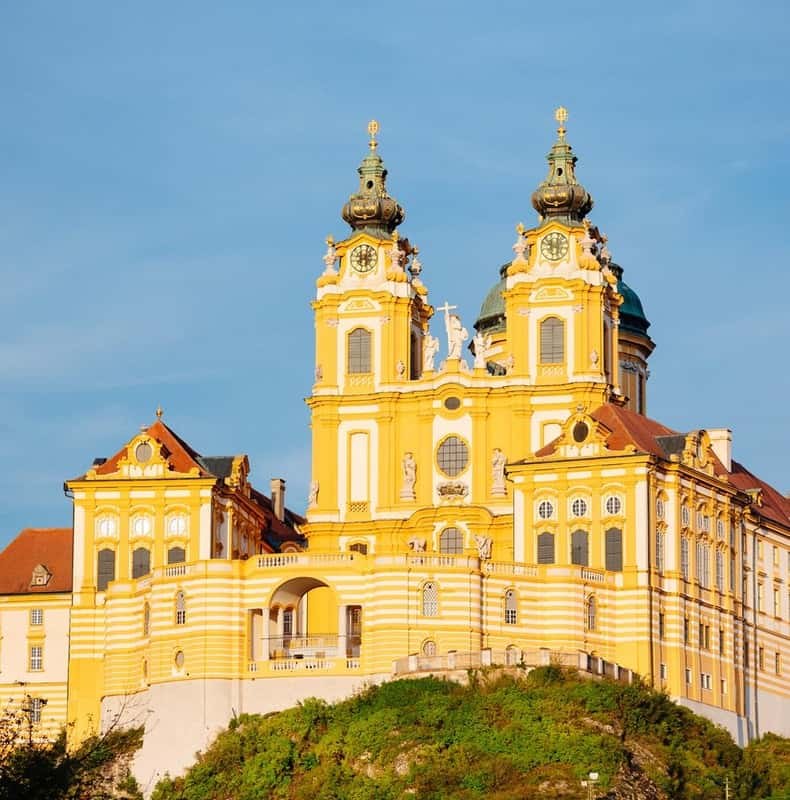
building you see is younger, a Baroque rebuild begun in 1701. A
Melk Abbey guided tour takes you through the museum rooms where that story is told, and this
is the outline to bring with you.
A Babenberg fortress becomes a monastery
In 976 Emperor Otto II gave the Eastern March, the frontier territory that became Austria, to
the Babenberg family as a fief. The Babenbergs held fortified centres across the march, and Melk
was one of them. A community of canons already served the fortress church.
As the march grew eastward, Melk lost its military importance. Margrave Leopold II decided to
turn the fortress into a monastery. Saint Coloman and three early margraves, Henry I, Adalbert
and Ernst, were already buried there.
On 21 March 1089 Leopold II gave the church and the fortress to Abbot Sigibold and his
Benedictine monks from Lambach in Upper Austria. They came to pray at the Babenberg graves.
Monks have lived here under the Rule of Saint Benedict ever since. The rule book those first
monks brought is still in the abbey library, a manuscript over 1,000 years old.
Saint Coloman, the abbey's patron
Saint Coloman: buried at Melk in 1014; patron of the
abbey, the town and the Babenberg margraves; honoured with a Mass every 13 October.
The legend makes Coloman an Irish king's son who gave up his crown to walk to the Holy Land.
At Stockerau, near Vienna, the frightened locals took him for a spy, tortured him and hanged him
on an elder tree. The tree came back into leaf and blossom, and the Babenbergs read that as a
sign of his holiness. His relics now lie in the left transept altar of the abbey church.
A scriptorium, a school and the fire of 1297
The young monastery prospered. It had a scriptorium, and its school for choirboys dates back
to 1160. A fire struck in 1297. The monastery's annals and the Melk Song of the Virgin Mary
survived it, and they record the monks' work in those years.
The Melk Reform and the manuscripts
The fourteenth century brought plague, natural disasters and a divided papacy. The Council of
Constance, from 1414 to 1418, restored a single pope but left the Church unreformed. It gave the
monasteries the task of reforming themselves, and Melk became the centre of that work.
The Melk Reform reshaped monasteries across Austria and southern Germany. Linked to the
University of Vienna, Melk became a model monastery. Monks wrote theology, monastic texts and
science, and about two thirds of the manuscripts in the library date from this period. The
rebuilt church was consecrated in 1429 and later given a panel altar by Jörg Breu the Elder.
Near collapse in the Reformation, and the recovery
Early in the sixteenth century, Luther's ideas spread quickly through Austria. Monastic life
at Melk almost stopped. Only three priests, three clerics and two lay brothers remained. Secular
officials ran the house, the wars against the Ottomans raised taxes, and the abbey's lands near
Vienna were laid waste.
After the Council of Trent, the Counter-Reformation restored a single faith in the Habsburg
lands. Educated young men from Germany joined the community. The school and the monks' training
in theology were renewed, and Melk became a well-ordered monastery again.
Abbot Berthold Dietmayr and Jakob Prandtauer rebuild it
The recovery inside the community soon showed on the outside. With the Ottoman threat over and
the economy growing, Melk was rebuilt from end to end.
- 1700. Berthold Dietmayr, born in 1670, is elected abbot at about 30.
- 1701. Work begins on a complete rebuild, to plans by master builder Jakob
Prandtauer. The church, first meant only to be modernised, is rebuilt too.
- 1706. Dietmayr is appointed rector of the University of Vienna.
- 1728. He becomes a Privy Councillor to the emperor.
- 1731. Paul Troger paints the ceiling of the Marble Hall.
- 1735. The two library rooms are furnished.
- 1738. A fire destroys parts of the monastery and the church towers.
- 1739. Dietmayr dies. His successors complete the Baroque rebuild.
Dietmayr chose leading artists for the interiors: Antonio Beduzzi, Johann Michael Rottmayr,
Paul Troger and Lorenzo Mattielli. Their work, room by room, is on
inside Melk Abbey.
See the rebuild with a guide
The abbey's guided tour covers the museum rooms, the Marble Hall, the balcony and the library. Compare the day tours from Vienna that include it.
Scholars and musicians of Baroque Melk
The building work ran alongside a flowering of learning. The historians Anselm Schramb and
Philibert Hueber and the Pez brothers were known far beyond the abbey. So were its musicians:
Robert Kimmerling, Marian Paradeiser and Johann Georg Albrechtsberger.
Joseph II, the Enlightenment and survival
When Joseph II ruled after Maria Theresa's death, the state dissolved monasteries and abolished pilgrimages and
processions. Melk survived because it served the state, running the parishes that his reforms
assigned to it. That work cost it dearly, since each parish needed a rectory and a school.
In 1783 an imperial decree closed the abbey's theological institute, and young monks had to
train at the General Seminary in Vienna. In 1787 the school moved to St. Pölten, while Melk still
paid for it. After Joseph's death the monasteries regained their autonomy, and the school came
home in 1804.
The twentieth century and the first tourists
During and after the First World War the monks installed sewers, plumbing and electricity.
Urgent restoration was paid for by selling treasures, among them a Gutenberg Bible.
From 1938 the abbey lived under constant threat of dissolution. Monks were threatened with
arrest, many were conscripted, the school was taken from the Benedictines and rooms were
confiscated. Only a small part of the building stayed a monastery. Because the community was
never dissolved, the abbey came through the end of the war and the occupation with less damage
than houses that had been.
After the war the badly damaged church dome was repaired and the exterior restored. In 1960
the abbey opened to tourists for the first time, and its exhibition on the Baroque drew 380,000
visitors that year. The school later began to admit girls, and the whole building was restored.
Today the abbey is a working monastery, a school and a museum at once.
Melk Abbey history at a glance
| Year | What happened |
|---|
| 976 | Otto II gives the Eastern March to the Babenbergs; canons live at the fortress of Melk |
| 1014 | Saint Coloman is buried at Melk |
| 1089 | 21 March: Leopold II gives the church and fortress to Benedictine monks from Lambach |
| 1160 | The earliest date for the monastery school for choirboys |
| 1297 | A fire; the annals and the Melk Song of the Virgin Mary survive |
| 1414–1418 | The Council of Constance; Melk leads the Melk Reform |
| 1429 | The rebuilt abbey church is consecrated |
| Early 1500s | Reformation low point: eight monks and brothers remain |
| 1700 | Berthold Dietmayr is elected abbot |
| 1701 | The Baroque rebuild begins, to plans by Jakob Prandtauer |
| 1706 | Dietmayr becomes rector of the University of Vienna |
| 1731 | Paul Troger paints the Marble Hall ceiling |
| 1735 | The library rooms are furnished |
| 1738 | Fire destroys parts of the monastery and the church towers |
| 1739 | Dietmayr dies; his successors finish the rebuild |
| 1783 | Joseph II closes the abbey's theological institute |
| 1787–1804 | The abbey school moves to St. Pölten, then returns |
| 1938–1945 | The school is taken and rooms confiscated |
| 1960 | The abbey opens to tourists; 380,000 visit that year |
| 2000 | The Wachau becomes a World Heritage Site; the revitalised abbey park opens |
Tours that can add the abbey's guided visit
Krems, Dürnstein, an hour free in Melk and a 75-minute guided abbey visit, which is in the fare on winter dates and on the all-inclusive option in summer, when a Danube boat joins the day.
From $136 per person
Check Availability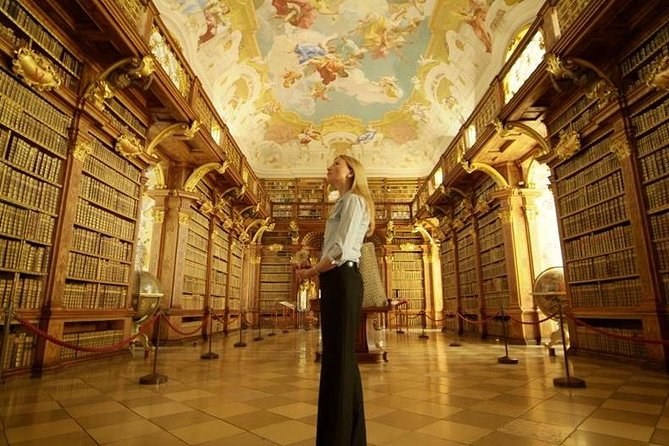
Your own guide from your hotel at 8:30, with Dürnstein, the river cruise from Spitz to Melk and a private 75-minute tour of the abbey, all in the fare.
From $741 per person
Check Availability
A 9:00 coach from the State Opera to Dürnstein, a short Danube cruise from April to October and 90 minutes at the abbey, with admission and a guided tour on the option that includes them.
From $142 per person
Check Availability