Melk Abbey Facts Worth Knowing Before You Go
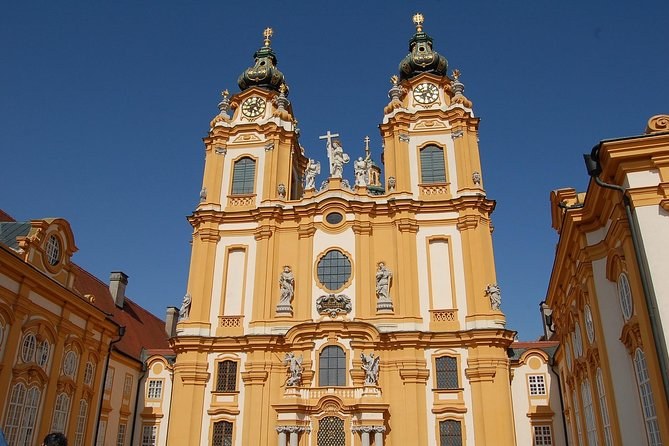
The short answer. Monks have lived at Melk without a break since 1089. The Baroque abbey you visit has 1,365 windows and 497 rooms, its library holds more than 100,000 books, and it only opened to tourists in 1960. These are the facts that change how you see it when you walk in.
You can admire Melk Abbey from the train window without knowing a thing about it. Inside, the details start to matter: why an emperor's eagle hangs over a monastery staircase, why the marble is not all marble. Here are the facts worth carrying in with you, each from the abbey's own records, and the Melk Abbey day trips from Vienna that bring you to them.
Monks have lived here without a break since 1089
On 21 March 1089, Margrave Leopold II gave the church and fortress of Melk to Abbot Sigibold and Benedictine monks from Lambach. Monks have lived on the rock ever since, with no gap. The rule book the first monks brought with them is still in the library, over a thousand years old.
The patron saint was a pilgrim who was hanged
Saint Coloman was an Irish pilgrim hanged at Stockerau, and he was buried at Melk in 1014. He is the patron of the abbey and the town. The town has held a Coloman fair since 1451, and the abbey still celebrates his Mass every 13 October. His relics lie in the left transept altar of the church.
At one point only eight members were left
The early 16th century, the time of the Reformation, was the abbey's low point. Only three priests, three clerics and two lay brothers remained. A century before, Melk had led a reform of monastic life after the Council of Constance, and about two thirds of the library's manuscripts date from that time.
The abbot who built it never saw it finished
Berthold Dietmayr was elected abbot in 1700 and began the Baroque rebuild with the master builder Jakob Prandtauer. In 1738, a fire destroyed parts of the monastery and the church towers. Dietmayr died in 1739, and his successors completed the work.
It has 1,365 windows and 497 rooms
The figures come from the abbey itself: 1,365 windows, 497 rooms and about 3.5 hectares of roof, roughly eight acres. You see a small share of those rooms on a visit, because most of the building is still home to the monks and their school.
| Fact | Figure |
|---|---|
| Monks since | 21 March 1089 |
| Saint Coloman buried | 1014 |
| Baroque rebuild begun | After 1701 |
| Marble Hall fresco | 1731, Paul Troger |
| Library furnished | 1735 |
| Fire | 1738 |
| Windows and rooms | 1,365 and 497 |
| Imperial Corridor | 196 m |
| Books in the library | More than 100,000 |
| Opened to tourists | 1960 |
| Library restoration | 2022–2032, €12 million |
The corridor is 196 metres long
The Imperial Corridor on the first floor runs 196 metres, or 643 feet. Its walls hold portraits of Austria's Babenberg and Habsburg rulers. The rooms off it were built for imperial visits.
Most of the Marble Hall's marble is stucco
The Marble Hall looks like solid stone, but its walls are marble stucco. Only the door frames are real marble, from Adnet and the Untersberg. Above, Paul Troger's fresco of 1731 shows Pallas Athena in a chariot drawn by lions. The room is on inside Melk Abbey.
You see about one book in six
The library holds more than 100,000 books, including about 1,800 manuscripts and 750 incunabula, books printed before 1501. About 16,000 of them stand in the two historic rooms you visit. The rest are kept elsewhere, and from October 2025 about 16,000 volumes were moved out for the restoration.
The abbey sold a Gutenberg Bible to pay for repairs
After the First World War, the abbey paid for part of its restoration by selling cultural treasures, among them a Gutenberg Bible. From 1938 it was in constant danger of being closed down, and its school and rooms were taken.
Tourists have only been let in since 1960
For almost nine centuries the monastery was not open to tourists. It opened to tourists in 1960, and that year's Baroque exhibition drew 380,000 visitors. The long road from 1089 to that opening is on Melk Abbey history.
The garden pavilion was built for monks coming off a fast
In 1747–48, Abbot Thomas Pauer had Franz Munggenast build a pavilion in the park, for the monks to recover after strict fasting. Johann Wenzel Bergl painted it with exotic plants, animals and peoples in 1763/64. Look closely and you find angels playing cards and holding billiard cues.
The park is laid out on the church's axis
Mirror the building onto the gardens along the line of the two Babenberg towers, and the lantern of the church dome lands on the Baroque water basin. A steel strip in the Mediterranean Garden continues the line from Saint Coloman's altar to a palm tree. The park opens from late March to October.
Outside guides may not lead tours in English
The house rules let outside guides lead groups inside only in languages the abbey's own guides do not offer. The abbey guides in German and English every day. So if you want an English guided tour of the rooms, an abbey guide leads it.
Where to hear these stories on site
The Wachau Valley and Melk Abbey tour with a Danube boat adds a 75-minute guided visit on its all-inclusive option. For wine and the Wachau around the facts, the castles and wine private day and the private Melk and Dürnstein day both stop at the abbey. The whole Wachau, from Melk to Krems, has been a UNESCO World Heritage Site since 2000. The practical side is in how to visit Melk Abbey, and the weather by month is on Melk Abbey weather.
Tours that bring the facts to life
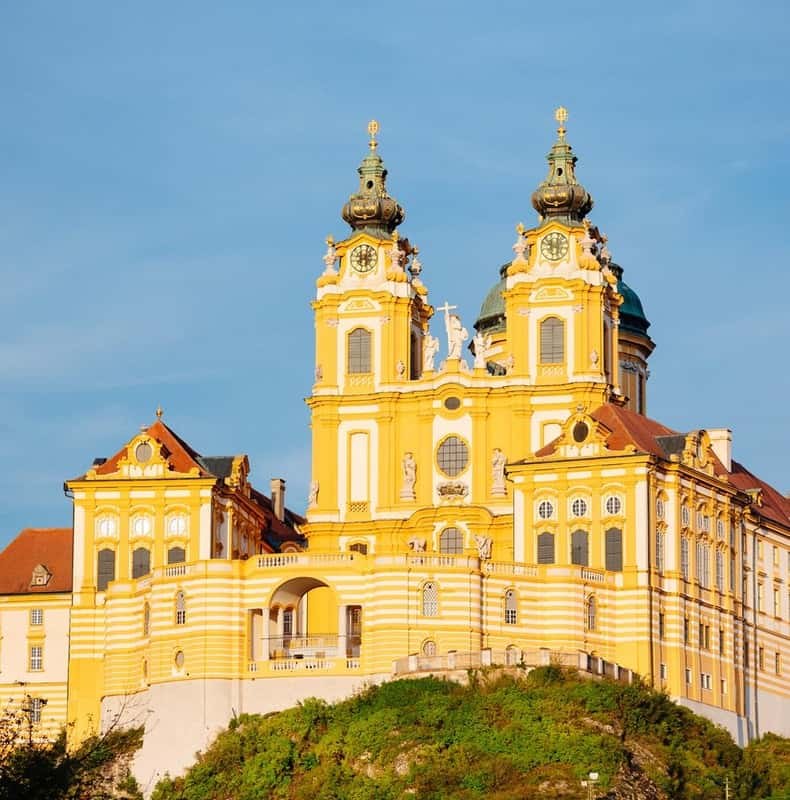
Vienna: Wachau Valley, Melk Abbey Tour with Danube Boat Trip
Krems, Dürnstein, an hour free in Melk and a 75-minute guided abbey visit, which is in the fare on winter dates and on the all-inclusive option in summer, when a Danube boat joins the day.
From $136 per person
Check Availability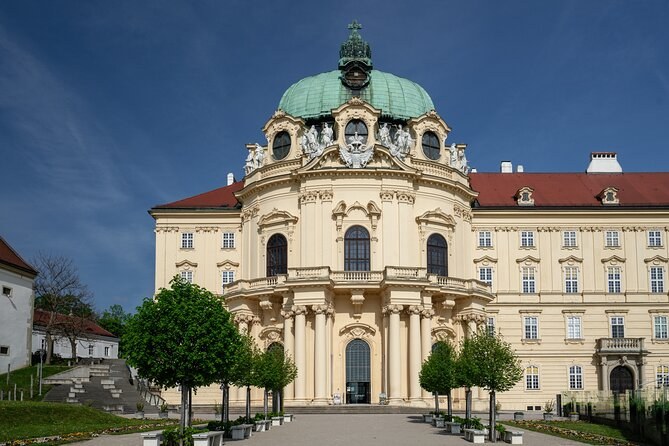
3 Castles & Wine Private Tour in Wachau Valley with Melk Church
A private guide and a driver from your hotel at 9:30, with the Klosterneuburg Abbey Treasury, Dürnstein, a family winery tasting and an hour at Melk Abbey.
From $490 per person
Check Availability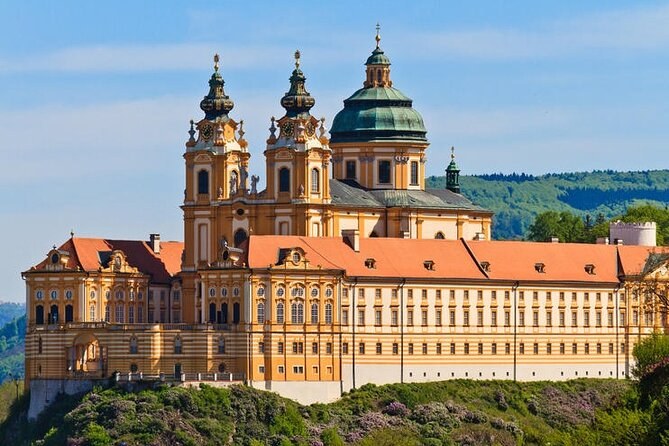
Melk, Wine & Dürnstein: A Wachau Private Tour from Vienna
A private driver from Vienna at 8:00 for two hours at Melk Abbey and time in Dürnstein, with a Göttweig Abbey option; the abbey ticket and lunch are extra.
From $426 per person
Check AvailabilityNext: carry one or two of these stories in with you, then let the rooms fill in the rest. Every fare sits side by side on Melk Abbey Tours.